Five Soft Plastic Rigs That Cover 80% of Situations
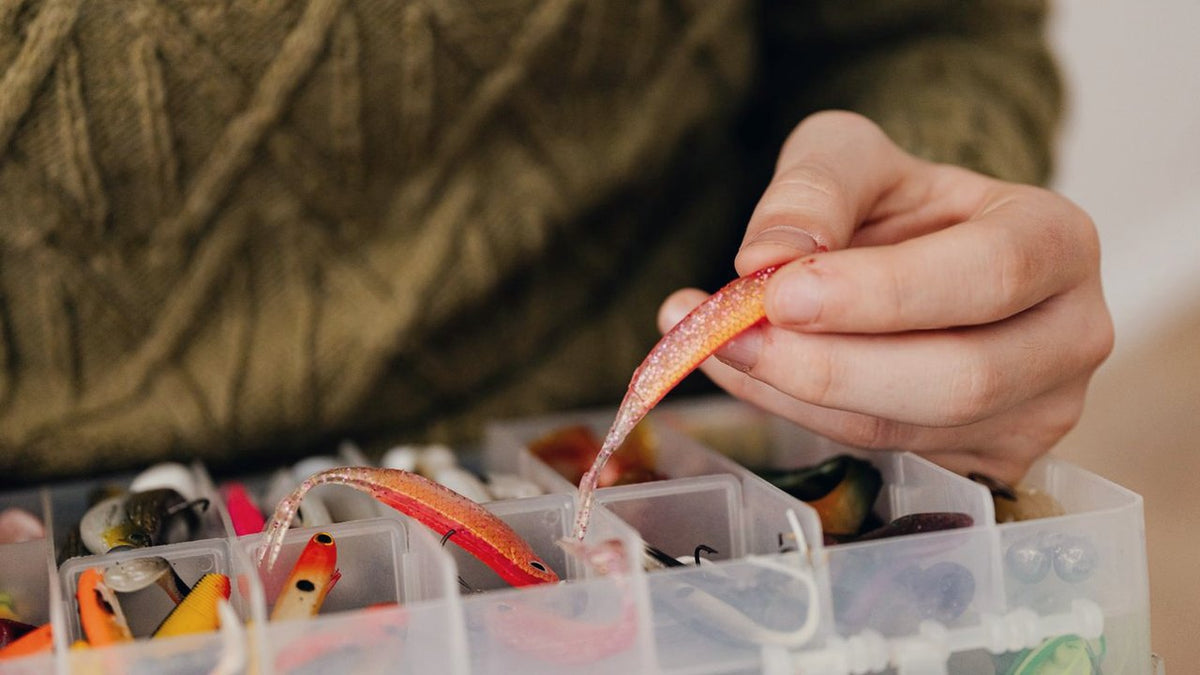
There are dozens of ways to put a soft plastic on a hook. Five of them cover almost every situation you will meet, and knowing when to use each one is worth more than owning forty bags of baits.
Soft plastics are the most forgiving lure class there is — and the most misused. The bait is rarely the problem. The rigging is. A perfectly good paddle tail rigged wrong will spin, roll, snag, or sit there looking like a piece of rubber. Here are the five rigs that earn their place in a box, and the conditions each one is for.
1. Jig head — the default
The rig you will use eighty per cent of the time. A round or football head threaded onto a paddle tail or a straight tail, cast out, let it sink, retrieve with the rod tip. Nothing complicated.
- Use when: you know roughly how deep the fish are, the bottom is reasonably clean, and you want to cover water.
- Weight rule: use the lightest head that still reaches the bottom in a count of three to five seconds. Too heavy and you lose the bait in the rocks and the fish lose interest; too light and you never get down.
- Mistake to avoid: an off-centre bait. If the tail spins on the retrieve, the bait is crooked. Pull it off and re-thread it straight — a spinning bait catches nothing.
2. Texas rig — for weeds and timber
A bullet weight above an extra-wide-gap hook, with the hook point buried back into the bait so the whole thing is weedless. This is the rig for anything with structure you would otherwise hang up in.
- Use when: weed beds, lily pads, fallen timber, rocky snags — anywhere an exposed hook point costs you a lure every other cast.
- Hookset: this is where people lose fish. With the point buried, you need to reel down until the rod loads and then lean into it hard. A timid strike pulls the bait out of the fish’s mouth before the point clears the plastic.
- Mistake to avoid: burying the point too deep. Skin-hook it — just under the surface of the plastic. Deep burial means missed fish.
3. Drop shot — when they are looking but not eating
The weight goes at the bottom of the line, and the hook sits 20–40cm above it, nose-hooked through a small straight tail or a worm. The bait stays off the bottom, hovering, twitching in place while you barely move the rig at all.
- Use when: fish are pressured, the water is clear, or you have watched fish follow a lure and turn away. It is the most effective “they won’t eat anything” rig there is.
- Technique: cast, let the weight hit bottom, keep the line just taut and shake the rod tip gently. The bait should quiver in one place. Move it a metre at a time.
- Mistake to avoid: using too heavy a weight. You want to feel the bottom, not drag a plough. And nose-hook the bait, not through the middle — a nose-hooked bait stands up and looks alive.
4. Wacky rig — the one that gets eaten on the drop
Hook through the middle of a straight tail worm, no weight at all. It sinks horizontally, wobbling, and a remarkable number of fish eat it before it reaches the bottom.
- Use when: fish are suspended, the water is shallow and calm, or you are fishing a spot you know holds one good fish.
- Watch the line: because there is no weight, the only bite indication is the line — if it stops falling or twitches sideways, set the hook.
- Mistake to avoid: fishing it too fast. This rig does the work on the fall. Give it five seconds after the splash before you touch it.
5. Carolina rig — for deep, open bottom
A heavier weight on a leader above a swivel, then 40–80cm of leader to a small hook with a bait. It drags along the bottom at distance and covers a lot of ground.
- Use when: fish are deep and spread out — big flats, points, offshore bars. It is a searching rig.
- Retrieve: long, slow sweeps of the rod, or drag it with the rod tip held high. Feel for anything that is not bottom: soft, hard, or a tick that keeps going.
- Mistake to avoid: too long a leader in heavy cover. In open water it is perfect; in rocks it hangs up constantly.
Choosing quickly on the bank
| Clean bottom, fish at known depth | Jig head |
| Weeds, timber, snags | Texas rig |
| Pressured fish, clear water | Drop shot |
| Shallow, calm, suspended fish | Wacky rig |
| Deep and spread out | Carolina rig |
Two small things that matter more than lure colour
Hook sharpness. A blunt hook costs more fish than any colour choice ever will. Run the point across your thumbnail; if it does not catch, replace it. Do this after every snag.
Fresh plastic. Soft baits go hard and lose their action after a season in a hot car or a tackle box in the sun. If a paddle tail no longer kicks at slow speed, it is finished — throw it out and open a new pack. That is what the Tide Box is partly for.